
How the Industry Often Sees Design
Over time, the industry chose convenience over coherence.
Design became easier to manage when it was broken into roles, departments, and deliverables. UX here. Visual there. Motion somewhere else. Communication handled separately.
This structure may have made hiring, budgeting, and scaling simpler. But it also quietly changed how design itself is understood especially in corporate and services environments.
Design began to be seen as a set of functions, rather than a way of thinking. Success became tied to outputs, tools, and speed. Craft started being measured in isolation, not in how well things came together.
In this framing, coherence often becomes nobody’s responsibility because everyone is “doing their part.”
How Many Young Designers Come to See Design
This fragmentation doesn’t stop at the organisational level.
It also shapes how many young designers learn to see themselves largely because this is how the industry demands it. Many enter the field believing they must choose a box early: UX designer. Visual designer. Motion designer.
They begin measuring their worth through tools, titles, and narrow skill stacks. Curiosity beyond the defined role is often discouraged or seen as dilution rather than depth.
I’ve seen young designers either feel anxious about not fitting cleanly into one category, or become rigid in their understanding of what design is. Some stop asking broader questions because they feel it’s “not their place.” Others rush to specialise before they’ve had time to understand the whole.
What often gets lost early is the confidence to think beyond immediate output to see design as sense-making, not just execution.
What It Means to See Design Holistically
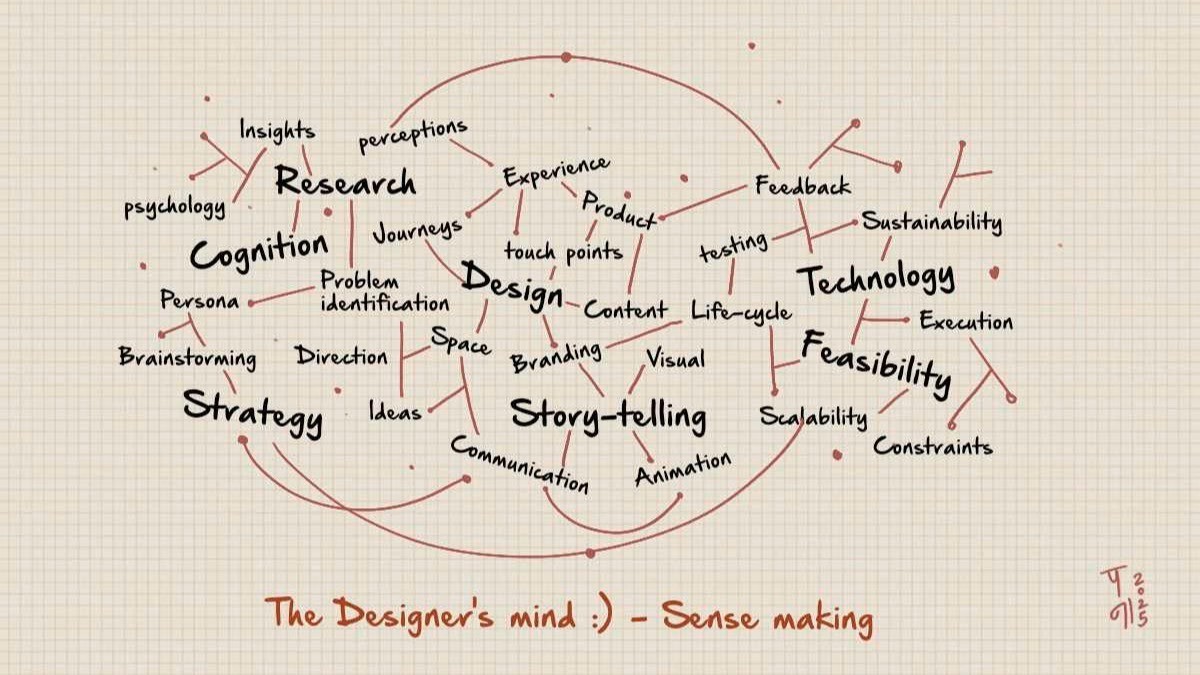
Holistic design doesn’t mean doing everything yourself. It means understanding how everything connects.
It means designing with awareness of the whole, even when you’re responsible for only one part.
At Studio Vitamin D, this belief shapes how we work. Clients may approach us for UX and end up rethinking their communication or brand or come in for communication and uncover deeper product or experience gaps. Within the team, we encourage everyone to think like product designers, not isolated specialists.
Because fragmentation rarely comes from users. It comes from organisations. Job titles, org charts, scopes, and deliverables slowly define what design is “supposed” to be. Over time, designers begin to say, “This isn’t my scope” or “I’ll just do my part.”
That mindset may protect boundaries, but it weakens ownership.
Design was never meant to be a set of isolated disciplines. It was always about making sense of the world for others.
Specialisation will continue and that’s fine. But without holistic thinking, it turns into silos.
The richness of design doesn’t lie in sharper compartments. It lies in designers who can connect disciplines, hold complexity, and create coherent experiences.
That’s not a role. That’s a way of seeing.
#HolisticDesign #DesignPhilosophy #DesignThinking #SenseMaking #ExperienceDesign #SystemsThinking #DesignLeadership #CreativePractice #DesignCulture