blogs

A Case for Holistic Design

The Hidden Brief

The Hidden Brief

Parag Natekar | March 13, 2026

Parag Natekar | May 29, 2026

blogs

The Hidden Brief

Parag Natekar | May 29, 2026

parag blog

What founders and designers need to uncover together

Most briefs I receive are either too vague to act on or so focused on outputs that the real problem stays hidden inside them.

Over a decade of running Studio Vitamin D, I’ve realised something: the brief is rarely wrong but it’s almost always incomplete. Not because clients don’t understand their business. But because the brief is written from inside the problem.

And when you’re too close to a problem, you naturally describe the symptom first.
“We need a new website.”
“We need a design refresh.”
“We need a better app experience.”

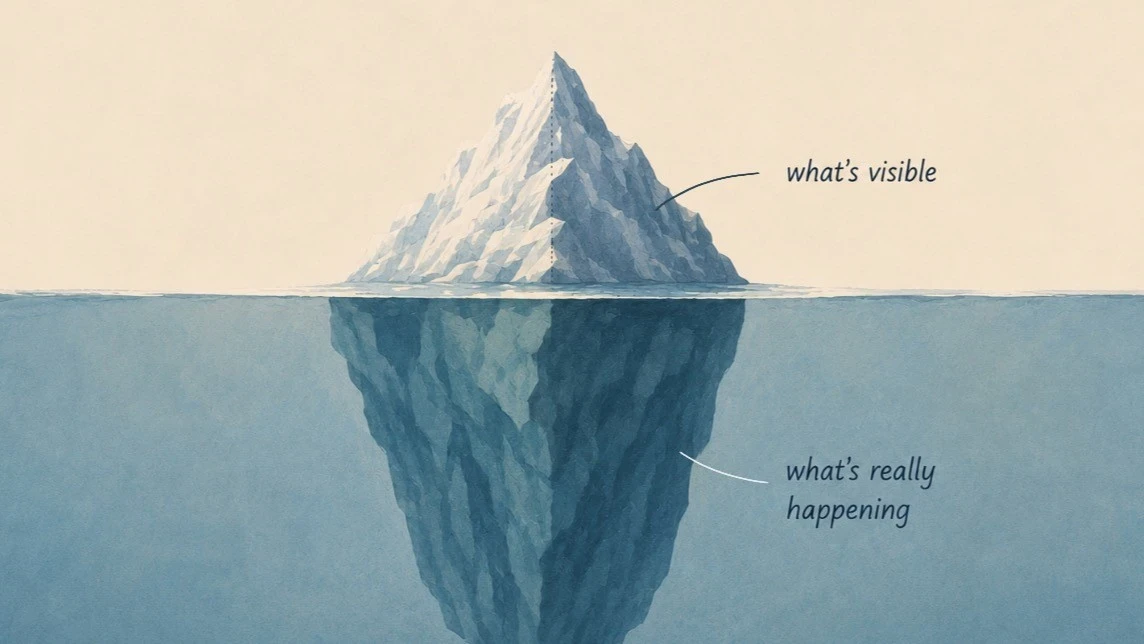
But often, those are not the actual problems. They’re just where the problem becomes visible. The real work begins when we pause and ask: What are we actually solving?

_____

The brief behind the brief

A brief might say: “We need a new app interface.”
What it often means: users are dropping off because the product promise and the product experience don’t match.

A brief might say: “We need a brand refresh.”
What it often means: the company has evolved, but nobody has clearly articulated what it stands for anymore.

A brief might say: “We need a quick design refresh.”
What it often means: something deeper has shifted- audience, positioning, or purpose but the ask has been reduced into something easier to approve and act on.

The brief identifies the symptom. The real work is uncovering the cause.

_____

Why this phase gets rushed

When designers ask for time upfront for workshops, stakeholder conversations, research, alignment sessions, there’s often resistance.
“We already know what we need.” “Can we just start?”

But the most expensive design mistake isn’t poor execution. It’s executing clearly on the wrong problem.

This early phase often looks slow from the outside because nothing tangible exists yet. No screens. No visuals. No deliverables. But this is where the direction gets shaped.
Every hour spent building understanding upfront saves weeks of confusion, revisions, and misalignment later.

_____

What founders and designers need to uncover together

Most briefs I receive are either too vague to act on or so focused on outputs that the real problem stays hidden inside them.

Over a decade of running Studio Vitamin D, I’ve realised something: the brief is rarely wrong but it’s almost always incomplete. Not because clients don’t understand their business. But because the brief is written from inside the problem.

And when you’re too close to a problem, you naturally describe the symptom first.
“We need a new website.”
“We need a design refresh.”
“We need a better app experience.”

But often, those are not the actual problems. They’re just where the problem becomes visible. The real work begins when we pause and ask: What are we actually solving?

_____

The brief behind the brief

A brief might say: “We need a new app interface.”
What it often means: users are dropping off because the product promise and the product experience don’t match.

A brief might say: “We need a brand refresh.”
What it often means: the company has evolved, but nobody has clearly articulated what it stands for anymore.

A brief might say: “We need a quick design refresh.”
What it often means: something deeper has shifted- audience, positioning, or purpose but the ask has been reduced into something easier to approve and act on.

The brief identifies the symptom. The real work is uncovering the cause.

_____

Why this phase gets rushed

When designers ask for time upfront for workshops, stakeholder conversations, research, alignment sessions, there’s often resistance.
“We already know what we need.” “Can we just start?”

But the most expensive design mistake isn’t poor execution. It’s executing clearly on the wrong problem.

This early phase often looks slow from the outside because nothing tangible exists yet. No screens. No visuals. No deliverables. But this is where the direction gets shaped.
Every hour spent building understanding upfront saves weeks of confusion, revisions, and misalignment later.

_____

The difficult part nobody talks about

Even when this phase is done sincerely, it gets undermined in subtle ways.

Sometimes the work becomes “obvious” in hindsight
You go through the process honestly. You ask difficult questions. You uncover missing pieces. The problem becomes clearer.
And then comes: “Yes, that’s exactly what we meant.”
Not because the work lacked value but because once clarity appears, the effort required to reach it becomes invisible.

Sometimes the client isn’t ready for the answer
Research, workshops, stakeholder conversations, everything points clearly in one direction. And yet the client chooses not to move.
Not because the findings are wrong. But because clarity can be uncomfortable. Sometimes the real problem demands bigger change than the original brief was prepared for.

Sometimes the conclusion already exists
The outcome has already been decided before the process begins.
The discovery phase is tolerated, not trusted. Every insight is filtered through a fixed expectation.
At that point, the designer’s role is not to force agreement but to clearly present what the work reveals and let the client decide consciously.

_____

What good discovery actually looks like

Good discovery is not a checklist. It’s a shared process of becoming curious together. We slow down. We ask why before what. We stay with ambiguity long enough for something more accurate to emerge. And often, the brief changes.

What looked like a UI problem becomes a brand problem. What looked like a brand problem becomes a positioning problem.

This isn’t scope creep. It’s clarity.
A recent example: a client approached us to redesign their website. A few conversations later, it became clear the real issue wasn’t the website at all but it was the absence of a coherent brand narrative. The site was simply where that confusion showed up; The brief names the symptom.The real work is finding the cause.

_____

What I’d ask of every founder

When your design partner asks for time upfront to understand before creating; protect that phase.

Don’t treat it as a formality or compress it into one rushed meeting. The conversations happening there are not delaying the work. They are the work.

Because the brief you begin with is only the best understanding of the problem from where you stand today. Good design begins when someone helps you see it differently. And often, that shift changes everything.

If you’ve experienced this, from either side of the table, I’d genuinely love to hear your thoughts.

_____

#DesignThinking #HolisticDesign #DesignLeadership #ProductDesign #FounderMindset #UXStrategy #CreativePractice #DesignBusiness

great things start with a conversation !

pattern

great things start with a conversation !

© 2025 Studio Vitamin-D Pvt. Ltd.

great things start with a conversation !

© 2025 Studio Vitamin-D Pvt. Ltd.
