Mitigating physical danger in workshop enviorment
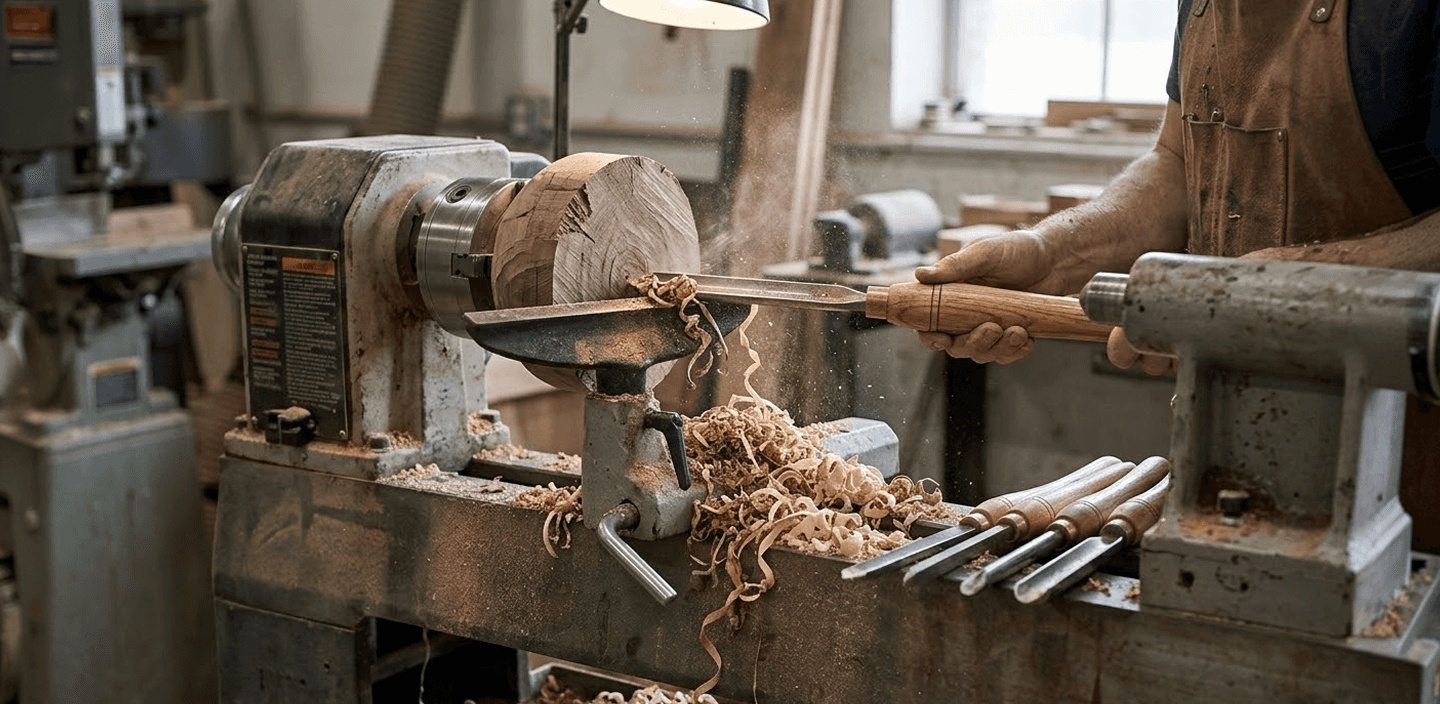
Wood lathes are widely used in manufacturing to shape wooden components. Safe operation requires understanding tool positioning, spindle speed, and material removal techniques. Traditionally, beginners learn these skills by practicing directly on real machines, which can pose safety risks and require significant supervision.
To address this, we explored VR-based training that allows users to practice lathe operations safely in a simulated environment.
Domain
Manufacturing
Services
VR Experience Design
Tech stack
Unity | PCVR/Quest | VR-controlled based output
Platform
Desktop, Mobile
Create a VR training module allowing users to practice lathe operations repeatedly in a safe environment, specifically teaching tool rest positioning, spindle speed adjustments, roughing passes, and finishing cuts.
Challenges
High risk of improper tool handling and injury
Excessive material wastage during early practice
Limited instructor supervision in active workshop environments
Difficulty visualizing correct cutting angles during operation
Design Decisions
Physics-Based Cutting Simulation: Custom algorithm replicates exact material removal during carving.
Progressive Lesson Structure: Modules scale from basic machine setup to complex shaping tasks.
Real-Time Visual Feedback: Immediate material removal shows how tool angles affect the cut.
Instructor Evaluation Points: Embedded checkpoints to monitor trainee progress.
Similar work



© 2025 Studio Vitamin-D Pvt. Ltd.


Mitigating physical danger in workshop enviorment
Create a VR training module allowing users to practice lathe operations repeatedly in a safe environment, specifically teaching tool rest positioning, spindle speed adjustments, roughing passes, and finishing cuts.
Wood lathes are widely used in manufacturing to shape wooden components. Safe operation requires understanding tool positioning, spindle speed, and material removal techniques. Traditionally, beginners learn these skills by practicing directly on real machines, which can pose safety risks and require significant supervision.
To address this, we explored VR-based training that allows users to practice lathe operations safely in a simulated environment.
Domain
Manufacturing
Services offered
VR Experience Design
Tech stack
Unity | PCVR/Quest | VR-controlled based output
Design Decisions
Physics-Based Cutting Simulation: Custom algorithm replicates exact material removal during carving.
Progressive Lesson Structure: Modules scale from basic machine setup to complex shaping tasks.
Real-Time Visual Feedback: Immediate material removal shows how tool angles affect the cut.
Instructor Evaluation Points: Embedded checkpoints to monitor trainee progress.
Challenges
High risk of improper tool handling and injury
Excessive material wastage during early practice
Limited instructor supervision in active workshop environments
Difficulty visualizing correct cutting angles during operation
Challenges
High risk of improper tool handling and injury
Excessive material wastage during early practice
Limited instructor supervision in active workshop environments
Difficulty visualizing correct cutting angles during operation
Design Decisions
Physics-Based Cutting Simulation: Custom algorithm replicates exact material removal during carving.
Progressive Lesson Structure: Modules scale from basic machine setup to complex shaping tasks.
Real-Time Visual Feedback: Immediate material removal shows how tool angles affect the cut.
Instructor Evaluation Points: Embedded checkpoints to monitor trainee progress.
great things start with a conversation !
© 2025 Studio Vitamin-D Pvt. Ltd.
great things start with a conversation !
© 2025 Studio Vitamin-D Pvt. Ltd.
Mitigating physical danger in workshop enviorment
Create a VR training module allowing users to practice lathe operations repeatedly in a safe environment, specifically teaching tool rest positioning, spindle speed adjustments, roughing passes, and finishing cuts.
Wood lathes are widely used in manufacturing to shape wooden components. Safe operation requires understanding tool positioning, spindle speed, and material removal techniques. Traditionally, beginners learn these skills by practicing directly on real machines, which can pose safety risks and require significant supervision.
To address this, we explored VR-based training that allows users to practice lathe operations safely in a simulated environment.
Domain
Manufacturing
Services offered
VR Experience Design
Tech stack
Unity | PCVR/Quest | VR-controlled based output